With the Green Claims Directive, the EU will introduce extensive regulations on the requirements for permissible environmental claims. The aim is to prevent greenwashing so that consumers can trust information about the environmental impact of products in future. The aim is to ensure that consumers in the EU consciously choose more sustainable products in future and thus actively contribute to environmental protection. In March 2024, the EU Parliament adopted the draft directive, which is now entering the trilogue phase. The Green Claims Directive is expected to come into force in 2027.
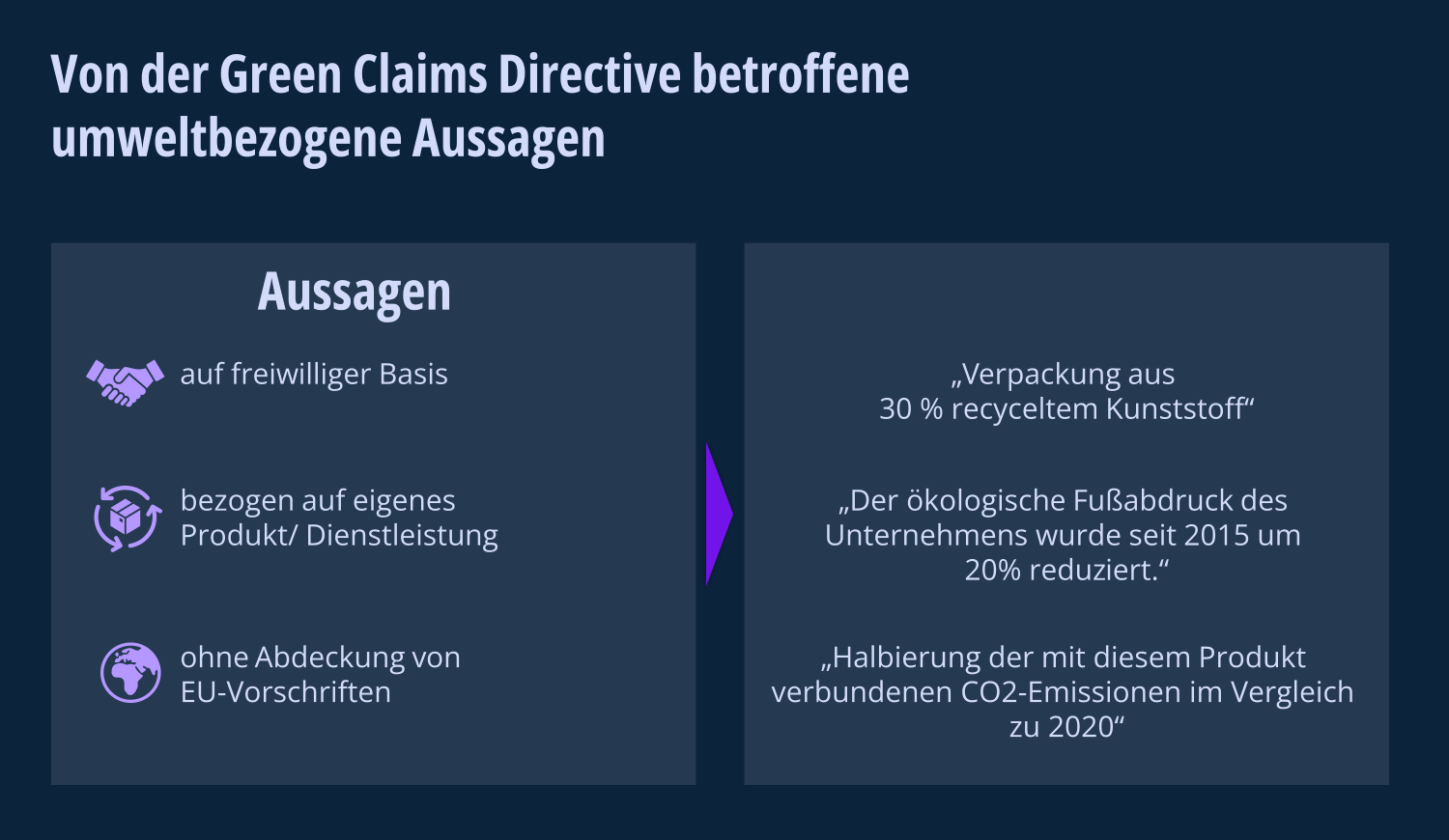
In order to appeal to environmentally conscious people, manufacturers label their products as “sustainable”, “recyclable” or “climate neutral” and advertise with claims such as “packaging made from 30% recycled plastic” or “halving the CO2 emissions associated with this product compared to 2020”. Companies have not yet had to substantiate such environmental claims.
In a 2020 study, the EU found that the majority of environmental claims are vague, misleading or unfounded:
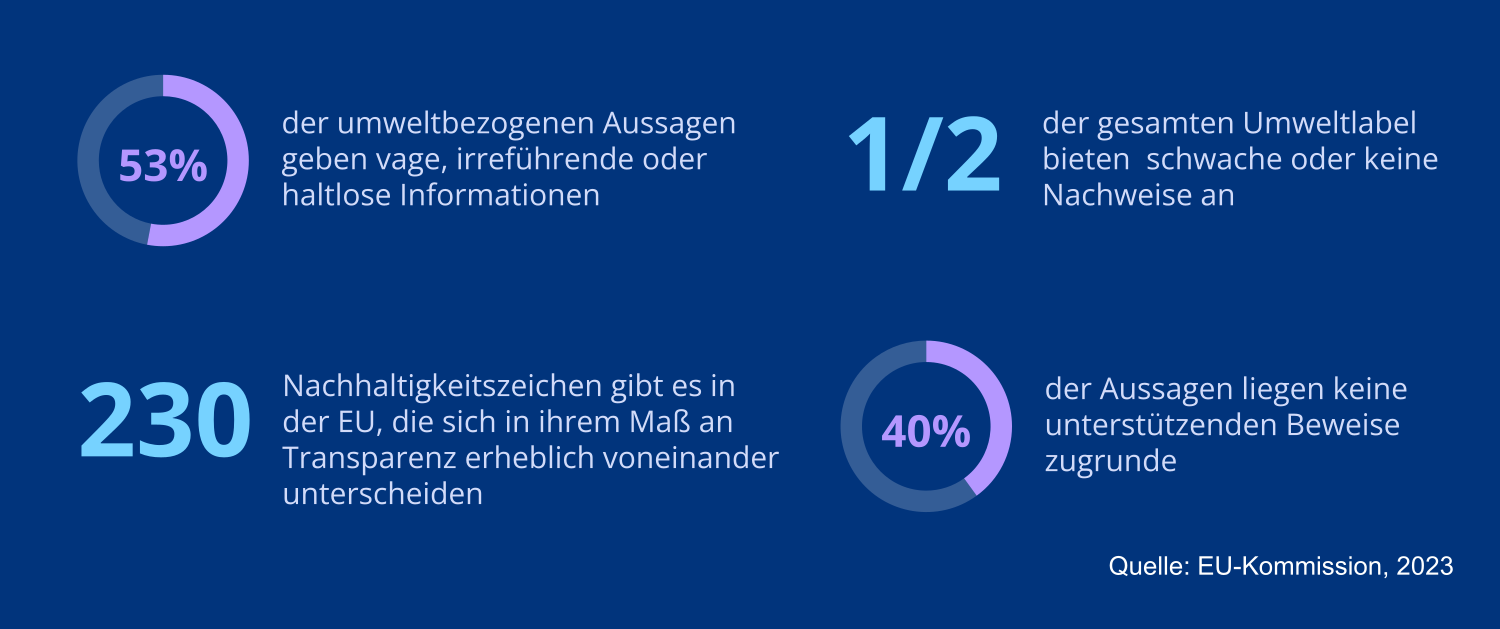
The EU Commission wants to change this situation in order to provide consumers with the certainty and transparency they need to turn to sustainable products in a more targeted manner.
This is regulated by the draft Green Claims Directive
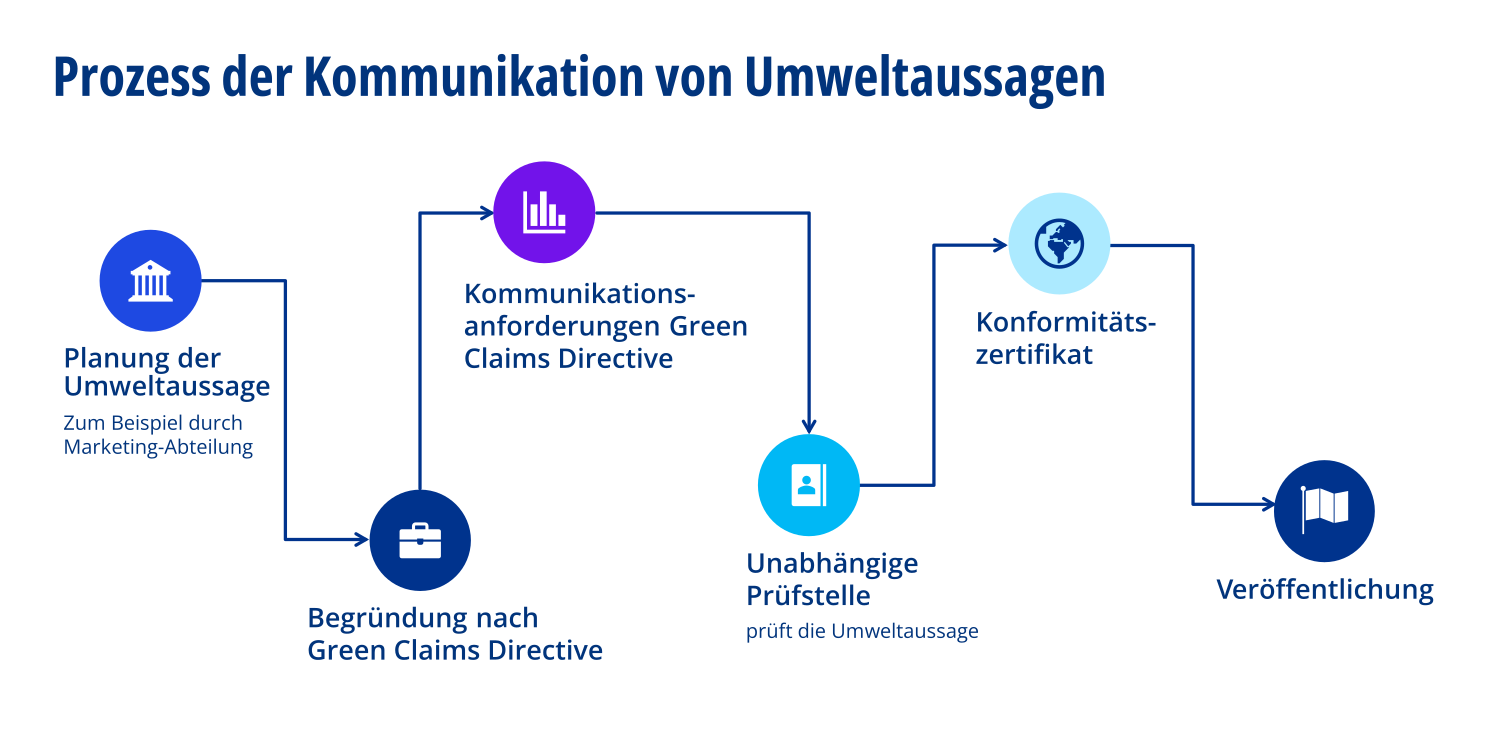
According to the draft Green Claims Directive, companies must provide consumers with evidence of voluntary environmental claims. The draft sets out clear criteria for how companies must prove their environmental claims and labels. Environmental claims must also be verified by an independent and accredited verification body before publication. The draft directive also contains rules on ecolabels to ensure that they are reliable.
Which companies are affected by the Green Claims Directive?
The draft Green Claims Directive regulates the business relationship between companies and consumers, i.e. B2C transactions. In principle, it should apply to all companies operating in the EU. Small and medium-sized enterprises are also covered by the draft Green Claims Directive. However, some exemptions or simplifications are provided for them.
The draft directive sets out these requirements for environmental claims
The draft directive stipulates that companies must base voluntary environmental claims to consumers on scientific evidence. This includes claims about goods, services or the company itself that claim positive environmental impacts and that are not currently covered by other EU regulations.
The directive introduces accredited, mandatory testing bodies that independently certify environmental claims and ecolabels in advance before companies are allowed to use them in communication with customers. If the requirements are met, the testing body issues a certificate of conformity that is recognized throughout the EU.
When does the Green Claims Directive apply?
The EU Commission presented the proposal for the directive back in March 2023. Around a year later, the EU Parliament adopted the draft at first reading; the Council has not yet given its approval, but in June 2024 it adopted its general approach to the proposed directive. Trilogue negotiations between the Council, Commission and Parliament began in January 2025. If the directive is adopted, the member states will probably have two years to transpose it into national law before the new requirements become binding one year later.
What are the consequences of non-compliance?
The draft directive provides for fines in the event of non-compliance. The member states will have to determine the details. The type and level of sanctions will depend on the nature and severity of the infringement and whether it is intentional or repeated. The economic benefit for the company can also be taken into account. In any case, companies are at risk of reputational damage, as the proceedings are regularly reported in the press. Consumers, environmental, nature and consumer protection organizations and other companies can report unauthorized environmental claims to the competent authority.
The EmpCo Directive
Environmental advertising is also regulated in the EmpCo Directive (Empowering consumers for the green transition), the directive on empowering consumers for the green transition through better protection against unfair practices and better information. The EmpCo Directive was also adopted by the EU as part of the Green Deal. It amends the UCP Directive on Unfair Commercial Practices and was published on March 6, 2024. The member states must implement the necessary measures by September 27, 2026. In Germany, the new rules will be implemented in the UWG. The EmpCo Directive prohibits certain environmental advertising per se. For example, companies are generally not allowed to advertise climate neutrality if climate neutrality is only based on offsetting measures. The Green Claims Directive is lex specialis compared to the EmpCo Directive.
Case law already prohibits certain environmental advertising claims
Even before the adoption and implementation of the Green Claims Directive, companies should refrain from making misleading advertising claims. The German Federal Court of Justice (BGH) applies strict standards to environmental advertising. In its ruling of June 27, 2024 (case reference: I ZR 98/23), it decided that advertising is misleading if it is not explained whether the advertised climate neutrality is achieved through actual CO2 savings or through offsetting.
Green Hushing is not the solution
For fear of sanctions, financial damage and loss of reputation, companies tend to stop communicating about sustainability issues. They simply remain silent about the measures they are taking in the interests of sustainability. This concealment of measures to promote environmental protection is known as “green hustling“. However, studies show that sustainability measures increase company value and brand value. If companies no longer talk about sustainability measures, they forgo this opportunity to increase value.