The German Federal Financial Supervisory Authority (BaFin) is calling on the financial sector to pay greater attention to money laundering prevention. In its report “Risks in Focus 2025”, it warns of the dangers associated with new business models and innovative technologies. BaFin emphasizes that a lack of protection against money laundering particularly endangers the stability of the financial market. Where exactly are the dangers and what preventative measures should financial institutions take?
Innovative business models harbor risks
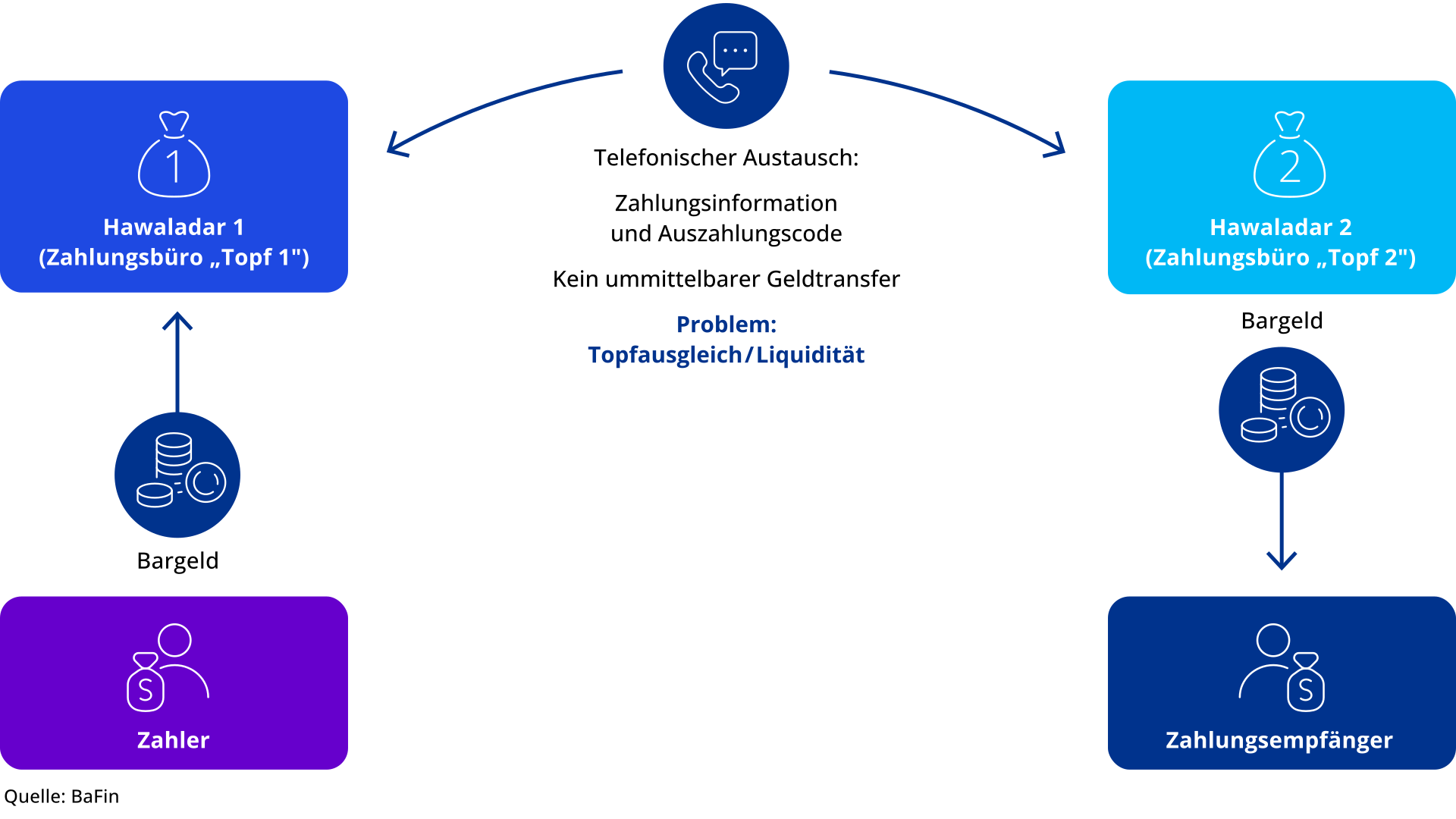
BaFin demands: Financial market players should take stronger action against terrorist financing and illegal money transfers from 2025. Due to the geopolitical environment, the risk of financial market players being misused for money laundering and terrorist financing remains high. As a result of geopolitical developments, the Hawala money transfer system, for example, has also gained in importance. It operates without the involvement of banks and without state approval or supervision. With Hawala, there are no receipts and you don’t need an account. The system is based on trust and secrecy and thus offers ideal conditions for illegal money transfers.
Methods such as loan fronting also increase the risk of money laundering and terrorist financing. Here, the bank only acts as a formal lender; the financing actually comes from an external third party. If the bank does not adequately check where the money comes from, it can inadvertently become involved in money laundering.
Technological developments make combating money laundering more difficult
Rapid technological innovations are opening up additional ways for criminals to disguise their illegal financial flows. Financial regulators continue to focus their attention on cryptocurrencies, as their anonymous structure poses an increased risk of abuse. The European Union has introduced stricter regulations to control crypto asset transfers with the Money Transfers Regulation as of December 30, 2024. (The new regulations entail additional tasks for financial institutions).
The increased use of virtual IBANs (vIBANs) is becoming another technological challenge in the fight against money laundering. Although companies benefit from the increased flexibility of vIBANs in their banking transactions, this also increases the risk of payment flows being concealed and regulatory controls being circumvented.
BaFin strengthens supervisory measures to prevent money laundering
BaFin has announced that it will step up its supervision and auditing activities to combat money laundering and terrorist financing. It is planning at least 75 special audits in the banking and non-banking sector for 2025. The focus will be on credit and payment institutions with an increased risk of terrorist financing.
BaFin is also preparing for the new European supervisory structure. The Anti Money Laundering Authority (AMLA) will improve supervision as an overarching anti-money laundering authority in cooperation with national authorities.
The field analysis of the use of vIBANs in Germany is another core project. This analysis enables the early identification of business models with a high risk of money laundering and the development of targeted countermeasures.
Recommendations for action to prevent money laundering for financial institutions
Financial institutions have increased due diligence obligations, particularly in the areas of KYC processes and identity verification. AI-supported analysis tools support the early detection of suspicious patterns and optimize transaction monitoring. Regular training increases employees’ awareness of new money laundering methods.
Close cooperation with the supervisory authorities is recommended. Internal audits and risk assessments ensure that compliance processes are regularly reviewed and adapted to new regulatory requirements.
Conclusion: Increasing requirements for financial institutions
The BaFin report highlights the growing challenges for financial institutions in the prevention of money laundering in 2025. Geopolitical developments, technological advances and regulatory measures are increasing the demands on compliance and risk management. However, the expansion of internal control systems can ensure compliance with regulatory requirements and help to protect the integrity of the financial market.
BaFin monitors compliance with money laundering prevention measures and promotes continuous process optimization at financial institutions. The effectiveness of the new regulatory approaches and increased European cooperation in the fight against money laundering will become apparent in the future.