
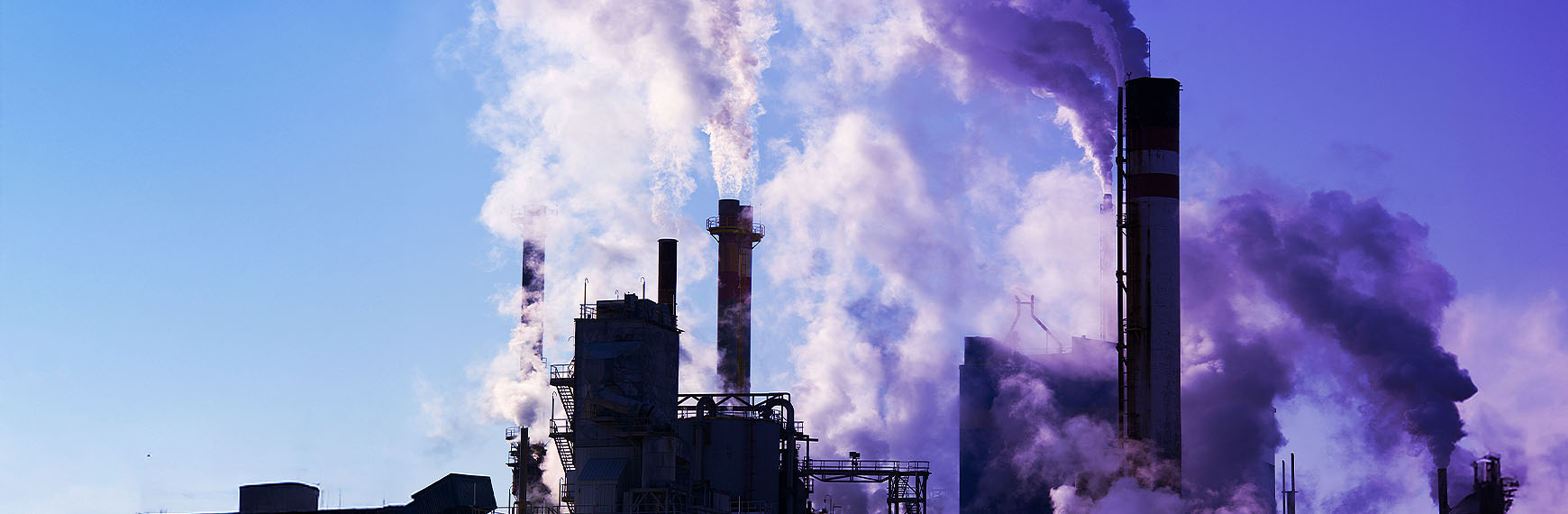
Environmental crime will be punished more severely in future. Directive (EU) 2024/1203 on the protection of the environment through criminal law is being transposed into German law. It provides for new criminal offenses and significantly higher penalties for companies, management and executives.
The deadline for national implementation is June 21, 2026. The EU directive sets minimum standards for the prevention and criminalization of environmental crime. In Germany, the Criminal Code (StGB), the Administrative Offenses Act (OWiG) and other ancillary criminal laws will be amended in the course of implementation. The draft bill of the Federal Ministry of Justice (BMJV) goes beyond the minimum standards of the directive:
The changes will affect companies of all kinds, but particularly in economic sectors with an environmental focus. Companies from the construction, agricultural/plant protection, chemical, hunting, waste disposal and waste shipment sectors as well as industrial companies, offshore projects, energy producers, transportation companies, civil engineering and infrastructure companies may also be affected. Legal representatives, i.e. management and board members, as well as operational managers of the companies must also expect increased penalties.
The BMJV would like to extend the range of penalties for certain offenses. The draft bill also provides for the following changes, among others:
In addition to water and soil pollution in accordance with Sections 324 and 324a of the German Criminal Code, the placing on the market of certain environmentally harmful products is also to become a criminal offense. This is the case if their intended use on a large scale, such as by a large number of users, can lead to significant pollutant emissions and thus to air pollution. The existing criminal offense of air pollution (Section 325 StGB) is to be adapted for this purpose. The penalty range for reckless conduct is also to be increased.
The ecosystem is to receive its own protection under criminal law. In future, the ecosystem is to be included as a further environmental medium in all offenses that currently sanction the endangering or damaging of certain environmental media. The directive also requires a legal definition of this term. This is to be legally defined in Section 330d (1) No. 2 StGB. Until now, environmental criminal law has protected the environmental media of soil, water, air, animals, plants and health. The inclusion of the ecosystem is intended to take account of the fact that environmental damage often involves complex interactions between living organisms and their abiotic conditions.
In addition, the emission of noise and thermal energy may be punishable in future. Companies should therefore be careful when introducing, discharging or introducing these forms of energy. So far, German criminal law has not conclusively covered these constellations. So far, only causing noise, vibrations and non-ionizing radiation has been punishable.
A new qualifying offense for Sections 324-329 StGB is to be introduced in Section 330 (2) StGB. If the intentional commission of an environmental offense results in catastrophic consequences for the environment, this should be particularly serious and punished more severely accordingly. This should be the case, for example, if a significant ecosystem is irreversibly damaged or the quality of the environment is massively impaired.
The unauthorized execution of projects is to be made a punishable offence in future. Previously, only the unauthorized operation of facilities was punishable. In this way, the BMJV wants to prevent the unlawful implementation of environmentally hazardous projects. This concerns projects for which an environmental impact assessment (EIA) or a corresponding preliminary assessment is required in the approval process. Typical examples are large infrastructure projects, the construction of power plants or chemical industrial plants. This is the first time that infringements in the area of major projects requiring approval have been specifically addressed under criminal law.
The directive also calls for extensive amendments to secondary criminal law, i.e. all secondary legislation with penalties and fines outside of the German Criminal Code. These include the Federal Nature Conservation Act, Federal Hunting Act, Waste Shipment Act, Plant Protection Act, Chemicals Act and other laws and national ordinances. The draft bill also provides for changes in this regard.
Violations by persons acting on behalf of the company could result in significantly higher fines. The maximum fines for environmental offenses are to increase considerably. In the case of intentional offenses committed by a manager, the amount of the fine will increase from up to 10 million euros to up to 40 million euros. In the case of negligent offenses, it will increase from up to 5 million euros to 20 million euros in future.
It is not clear what level of regulation and intensity the German legislator will provide for in its law transposing the directive. Associations have already expressed concerns about the draft bill, as it goes beyond the requirements of the Directive. However, even the minimum standards of the directive already lead to a considerable increase in economic risk for companies and their managers. Although the CDU/CSU and SPD had spoken out in favor of less bureaucracy in their coalition agreement, the draft bill makes it clear that there will be no alignment with the minimum standards of the Directive. Instead, companies are now to be subject to stricter compliance requirements. Compliance management should now urgently provide for measures:
The BMJV’s draft bill for the implementation of Directive (EU) 2024/1203 significantly tightens German environmental criminal law. With new criminal offenses, extended offenses, the inclusion of the “ecosystem” and significantly increased fines for associations, the risk of criminal consequences for companies and their managers is increasing noticeably. At the same time, compliance with administrative licensing obligations is increasingly becoming the focus of criminal law assessments.
As a result, companies are not only facing higher sanctions, but also a significant increase in their compliance obligations. This affects both traditional environmental areas and cross-sector aspects such as supply chain and procurement compliance.
Overall, the draft bill suggests a noticeable tightening of the requirements for corporate due diligence and organizational structures. Companies are well advised to adapt their existing compliance management systems to the potential new requirements at an early stage in order to effectively minimize criminal and fine risks and ensure their own ability to act in their operational business.

Senior Manager
Fuhlentwiete 5
20355 Hamburg
Tel.: +49 40 360994 5098
fkirstein@kpmg-law.com

Partner
Friedenstraße 10
81671 München
Tel.: +49 89 5997606 5021
simonmeyer@kpmg-law.com


KPMG Law
© 2026 KPMG Law Rechtsanwaltsgesellschaft mbH, associated with KPMG AG Wirtschaftsprüfungsgesellschaft, a public limited company under German law and a member of the global KPMG organisation of independent member firms affiliated with KPMG International Limited, a Private English Company Limited by Guarantee. All rights reserved. For more details on the structure of KPMG’s global organisation, please visit https://home.kpmg/governance.
KPMG International does not provide services to clients. No member firm is authorised to bind or contract KPMG International or any other member firm to any third party, just as KPMG International is not authorised to bind or contract any other member firm.
